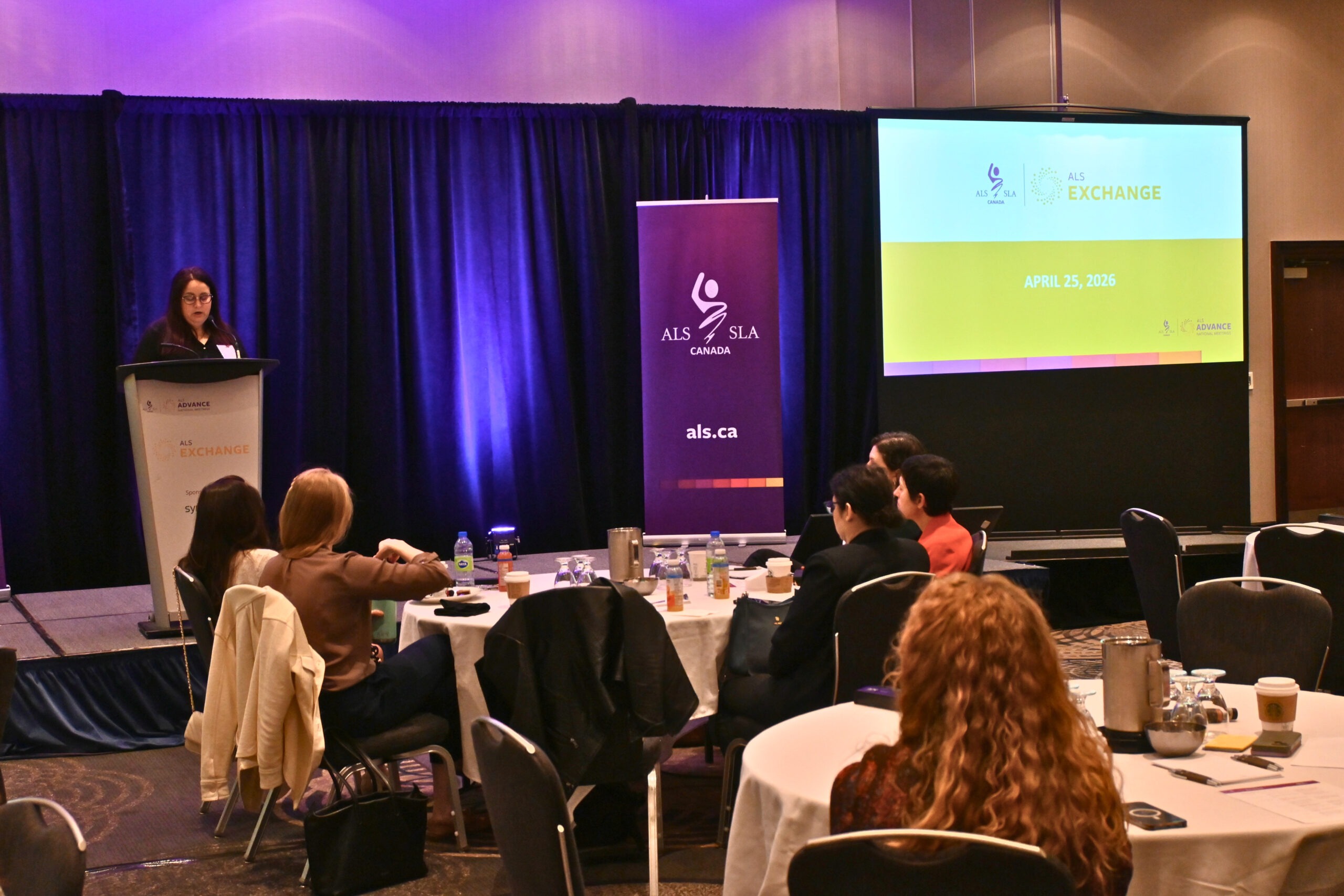
These groups provide vital support and guidance to people with ALS and their family and friends. People who have learned about the disease first-hand are often able to communicate most effectively to newly diagnosed people and their loved ones.
This section of our Handbook provides helpful information about the benefits of having a support group, how to begin one, the role of a support group, and suggested support group meeting topics.
What is an ALS Support Group?
It is…
sharing helpful hints about dealing with doctors, employers, friends, relatives and household barriers.
facilitators who have genuine concern for others.
a safe place to express oneself in confidence.
a place to learn more about the disease and to find hope.
resources -- films, guest speakers, concerned community members, current research, diets, books, therapies, and beliefs.
individuals who share experiences as participants in clinical trials.
gaining insight about the sometimes tremendous amount of stresses put on relationships and families.
people who gather together who are concerned about what is happening in each other's lives and who share what it is like to live with ALS and discuss the challenges to keep functioning at the highest level possible.
It is not...
group therapy. There is no psychological jargon or probing into one's personal life.
An attendee does not even have to talk if s/he does not want to.
some magical experience that enables a person to breeze through the devastation of ALS.
gossip session where people talk about who was seen where and with whom.
Benefits of a Support Group
Support Groups provide opportunities to lend or receive emotional support from others who are dealing with ALS. Information and resources that are produced at all levels of the Society are more easily accessed through these groups.
There are many other benefits to establishing Support Groups and linking with other Support Groups. They include:
- The opportunity to provide face-to-face services to people in your community affected by ALS.
- Access to public awareness materials, such as those listed in the Appendices at the back of this Handbook.
- The opportunity to raise funds for equipment to enable people with ALS to remain independent and for research to find effective treatment and, ultimately, a cure.
- The use of the logo, fundraising materials, volunteer resources or any other of the Society's resources designed to assist Chapters and Support Groups.
- A sense of teamwork and belonging within a larger group of individuals who are all working for the same cause.
- Representation on the ALS Society Board of Directors and Committees, depending on the Unit's by-laws.
Note:
A Support Group and/or its facilitator will not offer legal, pharmaceutical or medical advice, but will direct people to the appropriate professionals.
Guidelines for Establishing ALS Society Support Groups
Over the years, several of the ALS Society's partners have developed a series of policies and procedures to ensure that Support Groups accomplish set goals and run effectively.
Here's a summary of several efforts.
The Support Group will:
- Comply with all policies, procedures and guidelines established by the ALS Society Board of Directors.
- Send a list to the office indicating names, addresses, contact numbers and positions of volunteers involved with the Support Group.
- Establish banking procedures according to the direction provided by the Chapter/Society. Support Groups do not retain any revenues accrued, but will have expenses covered as budgeted and approved by the Sponsoring Chapter or Society. In order to keep the organization functioning, revenues are shared at the different levels.
- In some cases, report directly through a sponsoring Chapter. Where there is no sponsoring Chapter within close proximity, the Society will assume financial responsibility for the Support Group. In both cases, the Support Group will be expected to prepare a budget and plan of activities and, where feasible, to raise the funds required to support local activities. The budget and plan are subject to the approval of the office or the sponsoring Chapter.
- Organize as a minimum, all fundraising campaigns which may require participation from groups across the province. These campaigns should include a Cornflower Day Campaign in June to raise funds for research and to build awareness of ALS.
- Provide a minimum level of service, which may include providing access to information about local and Society services.
- Hold Support Group meetings, as required.
- Meet with other group members on an as-needed basis to conduct business.
Starting a Support Group
If you are planning to start a Support Group in your community, the following tips will assist you.
Identifying the Need:
The need for a Support Group is identified via:
- The Unit's Board of Directors or staff
- ALS clients or family members
- A health care professional in the community
- Person in the community who is supportive of ALS
Establish an Organizing Committee:
- An interested individual reviews the guidelines established by the ALS Society for Support Groups. The next step is to meet with other interested persons from the area who may form the Organizing Committee. Consider approaching health care professionals for assistance. Consult with the ALS Society Unit for guidance.
Planning the Community Interest Meeting:
- Locate meeting place, determine date and time.
- Book guest speaker (for instance ALS Society speaker, neurologist or Chapter representative).
- Prepare and deliver/mail news releases to local media and other organizations as follows: (Refer to the sample release in the Appendix for content and design. The ALS Society can provide assistance, as well.)
- Local volunteer agencies
- Local Medical Association
- District Health Council
- VON, Homecare, Hospitals, Home Support Agencies, Occupational Therapists, Speech Pathologists, etc.
- Place posters in doctor's offices, pharmacies, on hospital bulletin boards, library/s, church halls, grocery stores, etc.
- The ALS Society may mail invitations to all known ALS patients and their families. Note that these lists are confidential.
- Plan refreshments
Suggested Format for the Community Interest Meeting:
Select a group facilitator in advance. The facilitator will welcome everyone to the meeting and asks those in attendance to introduce themselves.
The facilitator will then introduce the guest speaker who will provide a short presentation about ALS, the ALS Society, the programs and services available, and the structure and benefits of forming a Support Group.
Hold a facilitated question and answer period following this presentation. Issues that you will want to cover include:
- Is there enough interest/demand for a Support Group in this community?
- What are the main areas the Support Group should concentrate on? For instance,
- information forums
- support meetings
- assisting individuals to access equipment and services
- fundraising to help raise funds for research and patient services
- public awareness events
- Who is available to assist with organizing/conducting these services and events?
After the participants have decided to form a group, complete and send the Application to Establish a Support Group to the ALS Society. (See the Appendix section.) The Board of Directors of the Unit will grant the group official status at its next meeting.
The Group may set its next meeting date and begin to meet informally before official status is granted.
Tips for Effective ALS Support Groups
Purpose of the Group: The purpose of a Support Group is to bring individuals together to meet others with similar challenges, discuss feelings, gather information, and socialize. Support Groups are meant
to thrive, fulfil their function then dwindle until the need arises once again, usually with newly diagnosed patients.
Role of the Support Group Facilitator: The support group facilitator is there to guide the group, stimulate discussion, manage the group dynamics, and encourage interaction. (Refer to the position description, in the Appendix section of this Handbook.)
It is worth noting that not all of the following topics will be appropriate for all participants. For instance, talking about death and dying may upset newly diagnosed individuals.
Suggested Meeting Activities:
- Hold sessions for caregivers to discuss their frustrations and share ideas for rest, relaxation and coping with stress.
- Organize a respite day for caregivers.
- Arrange for volunteers or fellow caregivers who are willing to share caregiving responsibilities in order to relieve others.
- Discuss available resources -- government programs, transportation, respite programs, community hospices, life insurance.
- Discuss the fear of dying and coping with what lies ahead both for the client and his/her family.
- Hold a children's evening where entertainment is combined with a chat session to help children understand ALS, and cope with the challenges both at home and in the community (i.e.: other children teasing). Use the ALS Society's children's booklet as a resource to begin discusssion.
- Discuss research updates (invite a neurologist, researcher or drug company representative).
(Note: Caution the speaker not to recommend a certain therapy or drug to individual/s.)
- Hold equipment demonstrations.
- Discuss how to prepare an emergency response kit for temporary caregivers or respite volunteers.
- Hold a video/book review evening. Ask participants to review a book or video and present to the group.
Support Groups Evaluation
Ongoing evaluation of a Support Group is imperative to keep it fresh and up-to-date. When you pick a speaker and topic for a meeting discuss the objective with the speaker then set some goals for what information is to be imparted. From those goals,develop a quick evaluation form to be completed at the end of the meeting. This feedback will help to set the agenda for the next meeting, which covers this topic.
For example, if your topic is tube feeding and the feedback from the evaluation tells you that people would like more information about funding programs for the food and the equipment, you could invite someone from a government program that funds these things to attend to answer questions and provide some direction.
Remember . . .
The Support Group is there to support those living with ALS and their families. Don't be afraid to survey them to find out what they would like to discuss or learn during a meeting.
Position Description
Support Group Facilitator
Overview:
The Facilitator of Support Group meetings, as a member of the Patient Service Committee, is responsible for the monthly operation of the meetings.
Responsibilities:
- Arranges meeting place.
- Identifies topics for meetings.
- Coordinates speakers with the office and Patient Service Committee.
- Introduces and thanks speakers at meetings.
- Provides refreshments.
- Ensures security of location.
- Provides information for newsletter, as required.
- Attends Patient Service Committee meetings as required.
- Links with staff and Patient Service Committee Chair, as required
Time Required:
- One meeting per month (approx. two hours/month)
- If required, attendance at committee meeting (approx. one and one half hours/month)
- Speaker coordination (approx. two hours/month)